Since Russ is away at a conference this week, you’ve got me filling in for the WTW. This week, markets sold the AI story and bought safety. Concerns over AI spending weighed on technology stocks, while bonds, banks and energy names moved higher. The TSX outperformed the S&P 500, bond yields fell and the Canadian dollar strengthened modestly.
| Index | Close Oct. 15th 2026 | Close Oct. 22nd 2026 |
| S&P500 | 7,742 | 7,664 |
| TSX60 | 36,137 | 35,974 |
| Canada 10 yr. Bond Yield | 3.83% | 3.78% |
| US 10 yr. Treasury Yield | 5.08% | 4.98% |
| USD/CAD | $1.41894 | $1.40110 |
| Brent Crude | $105.75 | $113.12 |
| Gold | $4,170 | $4,024 |
| Bitcoin | $82,083 | $81,320 |
Source: Trading Economics
For the past two years, investors have rewarded big tech for spending on artificial intelligence. This week, they started asking for receipts. Despite posting strong results, Meta fell after raising its spending plans and outlining a new way to help fund its AI buildout. The selling spread quickly through technology stocks as investors questioned how long it may take for massive AI investments to generate meaningful returns. The technology isn’t going anywhere. What’s changing is how the market judges it, and companies that can turn spending into profit should stand apart from those that can’t.
Oil is back in the headlines. Brent crude rose roughly 7% this week to its highest level since May following renewed claimed Houthi attacks in Saudi Arabia, including strikes reported near an Aramco oil field. New incidents near the Strait of Hormuz added to concerns about potential supply disruptions. While oil remains below the highs reached following Russia’s invasion of Ukraine, the recent move higher serves as a reminder that energy markets remain vulnerable to geopolitical shocks. For energy-producing countries such as Canada, higher oil prices can provide support for both the TSX and the loonie, even as consumers feel the impact at the pump.
Speaking of Canada, the TSX held up better than U.S. markets this week, although both finished lower. The S&P 500 was dragged lower by weakness in technology, while the TSX benefited from having less exposure to those same companies and a much heavier weighting in financials, which make up roughly a third of the Canadian index. A stronger loonie, supported in part by higher oil prices, added to the relative resilience of Canadian assets this week. After spending much of the year watching AI-related companies drive returns, this week belonged to banks, pipelines and oil producers. The old economy still has a few tricks left.
Europe has had a restless autumn. Protests spread across France, Italy, Albania and elsewhere this week, driven by concerns ranging from housing affordability and rising living costs to the state of schools and public services. While the grievances vary by country, the common thread is growing frustration with economic conditions and government priorities. In France, hundreds of thousands marched over the weekend in what became the largest demonstrations of the current wave of protests. The unrest has spilled into financial markets, with the country’s 10-year government bond yield topping 5% for the first time since 2002 as investors question whether the government can pass a budget and get its debt under control. It’s a reminder that social pressures and government finances are increasingly connected, and bond markets are paying attention.
Big Tech’s AI ambitions are creating demand for more than just chips. Amazon announced plans this week to help fund a proposed nuclear project on the site of a former coal plant in Indiana, with 12 small modular reactors capable of generating 960 megawatts of electricity. Amazon would be the plant’s first customer, with the power supporting both its data centres and the regional grid. The project remains years away, but it highlights an emerging trend. The AI race is no longer just about software and semiconductors. Increasingly, it is a race for electricity. Canada is part of that story too, with Ontario Power Generation building the G7’s first grid-scale small modular reactor at Darlington, which it aims to connect to the grid by the end of 2030.
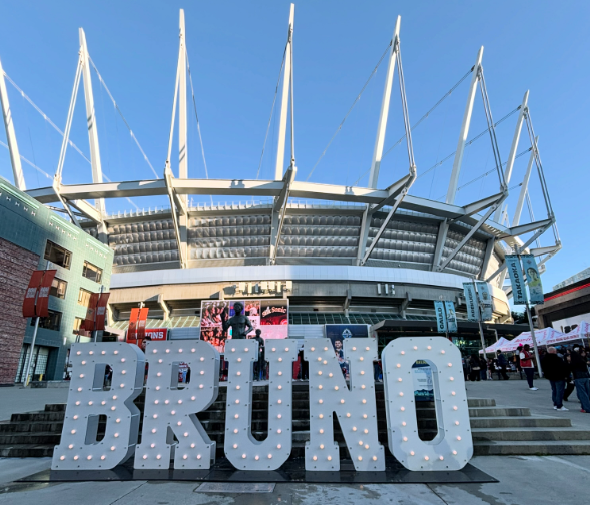
We’ll close with Bruno Mars, who wrapped up five sold-out shows at BC Place this week, setting a record for the most shows played by a single artist on one tour at the stadium. Judging by the turnout, demand remains alive and well in at least one corner of the economy.
Samantha Colby, CIM
Associate Portfolio Manager
